


In communities across Texas, a flood can be more than a flood. Near industrial facilities, rising water can carry additional health and environmental risks. In smaller or fast-growing communities, local leaders may lack the staff, data or resources to prepare for those risks and turn community input into action.
On Nov. 17, the Association of Public and Land-grant Universities (APLU) presented Texas A&M University with the 2026 Public Impact Research Award for its work through Texas Target Communities to address hazards and planning challenges. Dr. Angela K. Wilson, vice president for research, accepted the award on behalf of Texas A&M at the group’s annual meeting in San Antonio.
People are also reading…
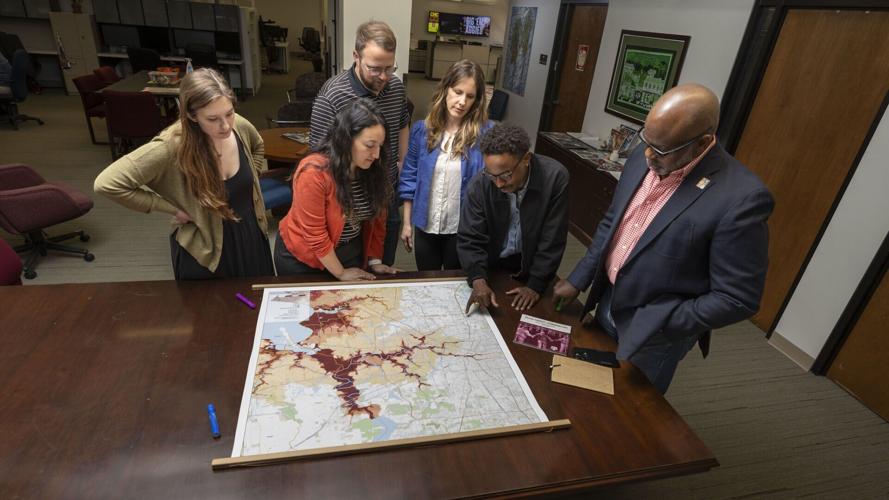
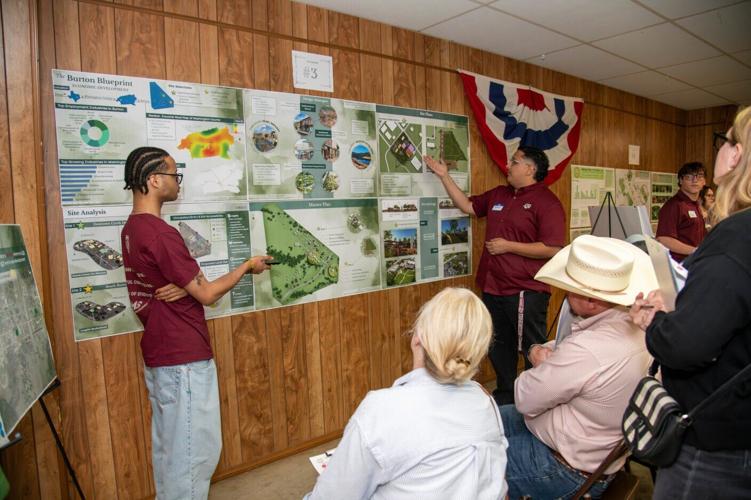
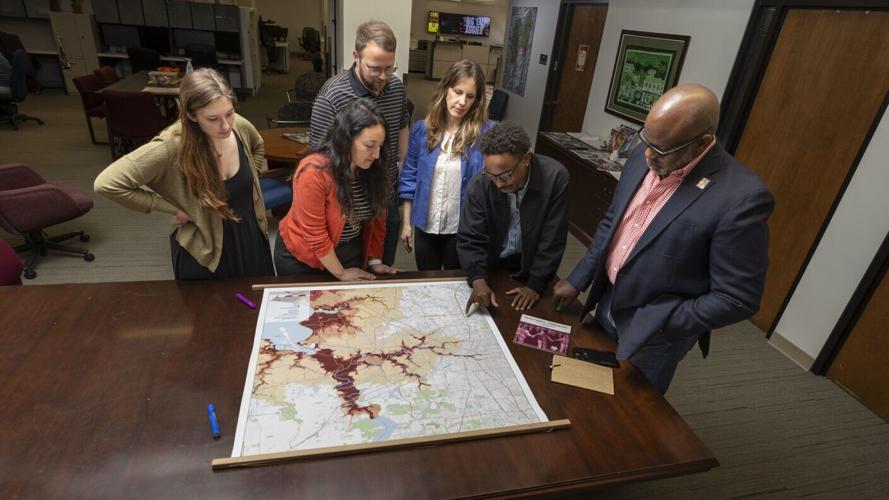
Texas Target Communities (TxTC) is a College of Architecture program that brings communities together with Texas A&M researchers and students to identify practical steps that can make them safer, healthier and better prepared for future challenges. Those conversations guide projects that may include community plans, hazard maps, infrastructure designs and strategies to pursue funding.
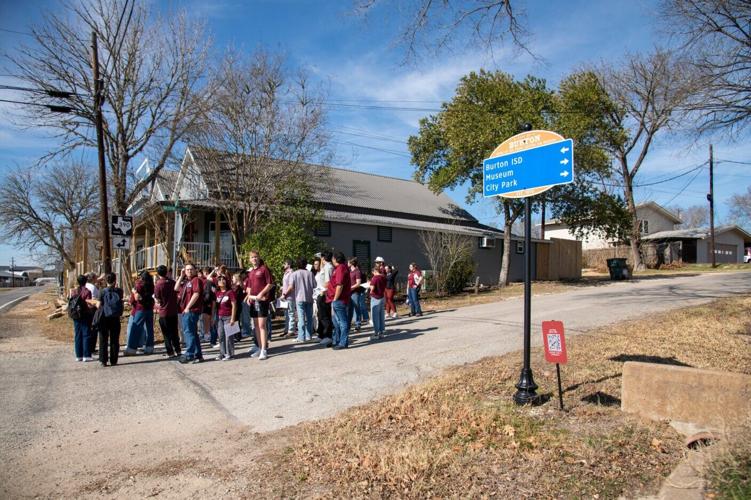
The program began in 1993 as a service-learning effort that connected students with small towns in need of urban planning assistance. In 2013, through a collaboration with the Hazard Reduction and Recovery Center, the program expanded its work to bring local decision-makers and residents into the process to help turn research into action.
Since 2013, TxTC has worked alongside 74 communities and hosted more than 300 community meetings. The program has engaged more than 250 faculty members and 2,500 students. Students have contributed nearly 466,000 hours of service — valued at approximately $14 million — to Texas communities.
“The Texas Target Communities program’s work is driven not by abstract research questions, but by the lived experiences and needs of the communities it serves,” said Texas A&M President Susan Ballabina. “Through this program, our team develops strong relationships with community partners and works tirelessly to foster and implement meaningful and applicable research with Texas communities. It demonstrates how universities can serve as trusted partners in addressing complex challenges while delivering impactful, measurable and lasting benefits.”
The 2026 honor is TxTC’s second national APLU recognition; in 2023, the program received the W.K. Kellogg Foundation Community Engagement Scholarship Award.
A partnership built to serve Texas for good
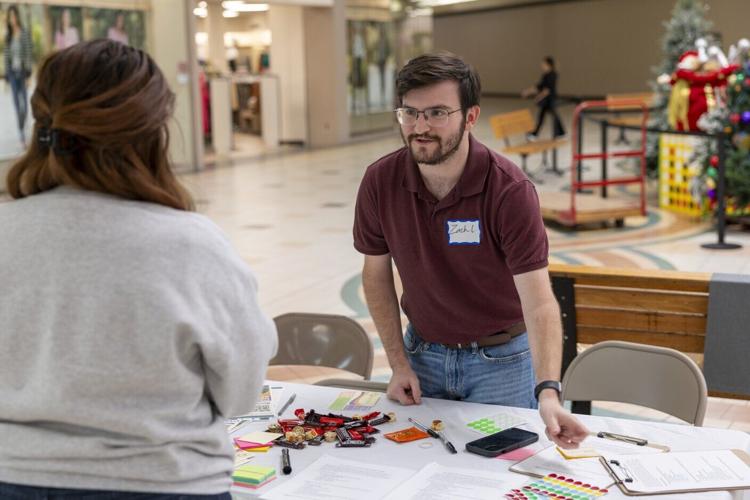
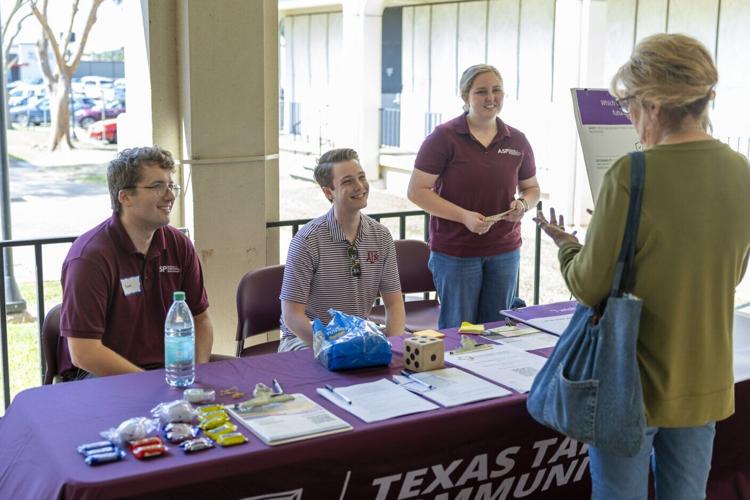
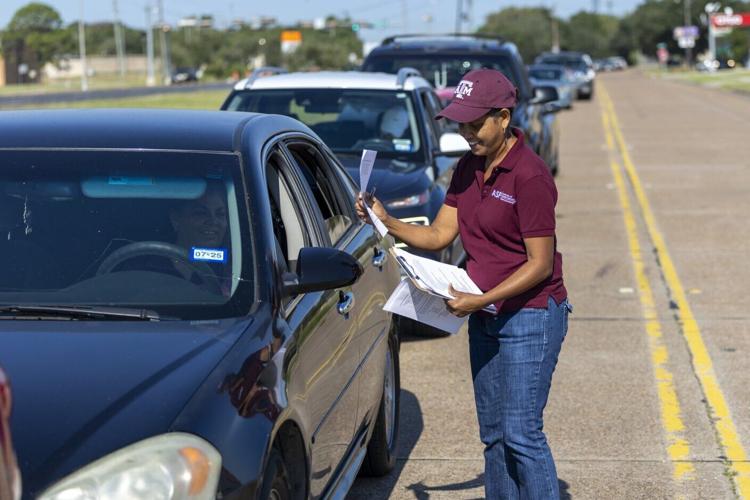
Today, TxTC partners with communities ranging from small towns and rural counties to urban neighborhoods and regions facing environmental and infrastructure challenges. Community leaders and residents help identify priorities, guide projects and steer recommendations throughout the process. TxTC then connects those local needs with Texas A&M’s teaching, research and service resources.
Jaimie Hicks Masterson, director of TxTC, said resident feedback shapes both the questions researchers ask and the tools they create. “Working alongside community stakeholders fundamentally changes the research itself,” Masterson said.
Masterson said Texas A&M is committed to enriching Texas communities through lasting relationships that help local communities thrive and benefit from the university’s presence.
“We take very seriously our land-grant mission and our commitment to serve Texas communities,” Masterson said. “We often say, ‘Once you are a Texas Target Community, you are family for life.’ Our community partners know our door is always open.”
How research can change communities
Galena Park, a community near the Houston Ship Channel, shows what that work can look like. The city faces flooding risks and is near petrochemical facilities and more than 130 chemical pipelines.
After Hurricane Harvey and a 2019 industrial fire heightened concerns about potential exposure to pollution, TxTC’s staff and students worked with residents and city leaders through an Environmental Protection Agency-funded project. The team combined local input with data from health surveys, flood modeling and planning to better understand how storms and flooding can increase environmental and health risks.
TxTC’s work led to a new community master plan and the creation of an online chemical-hazard dashboard and directory of local polluting facilities.
The city later secured $3.5 million for green-infrastructure improvements identified in the plan and more than $12 million in community-health funding. Its partnership with Texas A&M also supported the installation of a comprehensive air-quality monitoring system across Galena Park.
Working together for Texans
TxTC’s work is strengthened by its longstanding partnership with the College of Architecture’s Hazard Reduction and Recovery Center (HRRC), which provided early support for TxTC’s 2013 expansion, helping establish dedicated professional staff capacity for community engagement in disaster and resilience research.
Today, HRRC connects faculty, students and research partners working to understand hazards and reduce disaster risk. TxTC helps ensure that the resulting research is shaped with community members and presented in ways that are useful to local decision-makers.
Over the past five years, TxTC and HRRC have collaborated on 11 grants totaling nearly $25 million in external research funding from organizations including the U.S. Department of Energy, National Science Foundation, U.S. Department of Housing and Urban Development and National Institute of Environmental Health Sciences.
Together, they have developed 65 community plans, designs, assessments and reports that help communities use research in local planning and preparedness efforts.
Dr. Michelle Meyer, director of HRRC, said the partnership connects the center’s research expertise with the experiences of people living with hazard risks.
“The best part of being in the HRRC is seeing academic research turn into real-world action, and that happens through the leadership of TxTC,” Meyer said. “TxTC helps our faculty hear directly from residents living with hazard risks about how research can be most useful.”
Meyer said community input can help researchers identify options — such as smaller-scale drainage improvements, rain gardens or stormwater-maintenance programs — while communities continue pursuing larger infrastructure investments.
“Academic research often takes years to translate into real-world change, but our partnership between HRRC and TxTC changes that, resulting in more real-time, on-the-ground outcomes,” Meyer said.
By working directly with communities, TxTC brings together local experience and Texas A&M expertise to help Texans understand risks, secure resources and take practical steps toward a safer, stronger future.


