


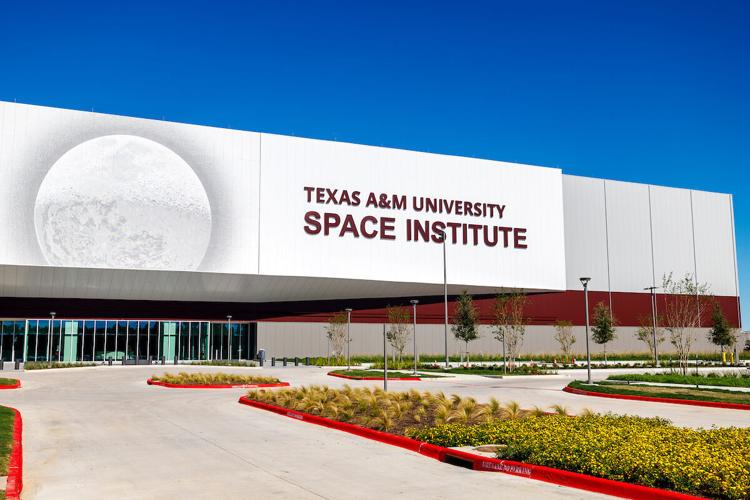

Just outside the gates of NASA’s Johnson Space Center, the Texas A&M University Space Institute is launching the future of space research. Bolstered by a $200 million investment from the Texas Legislature and the public’s reignited interest in space, the facility hosted a grand opening on Nov. 20, 2026.
Top innovators from Texas A&M will lead the Space Institute. Former astronaut Dr. Nancy Currie-Gregg will serve as director. Former NASA engineers Dr. Robert Ambrose and Bill Bluethmann will serve as the associate and assistant directors, respectively.
“The Texas A&M Space Institute positions Texas at the forefront of the rapidly growing space economy and strengthens our state’s role as a national leader in innovation,” said Glenn Hegar, chancellor of The Texas A&M University System. “It marks Texas’ commitment to leading the next era of space exploration, scientific discovery and economic growth.”
People are also reading…
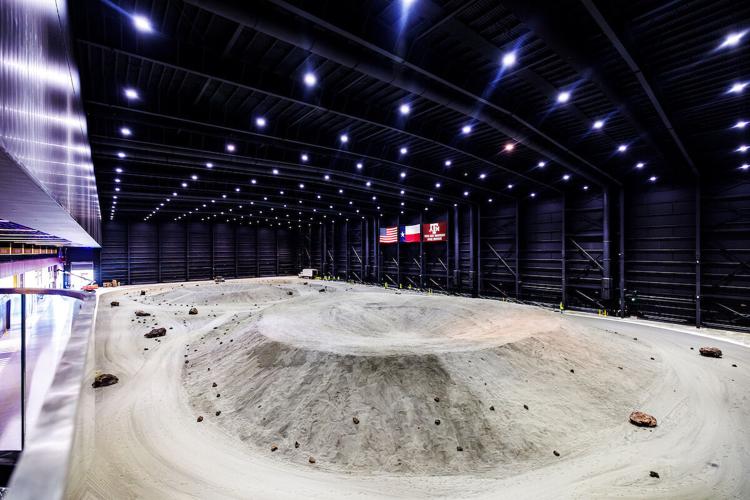
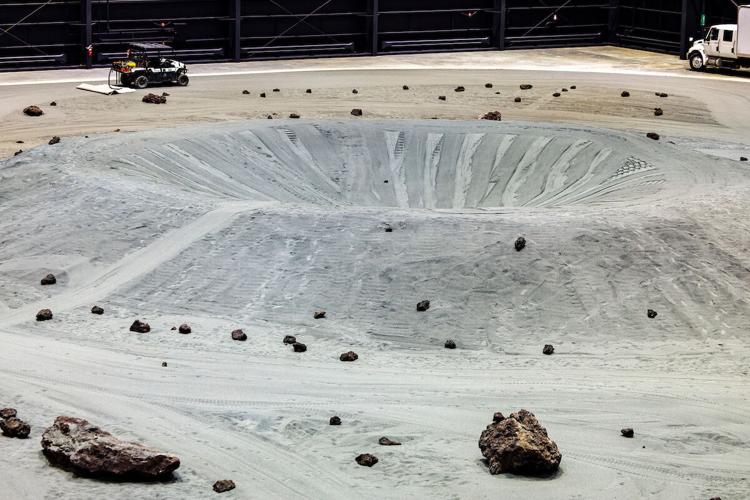
The Space Institute houses simulated lunar and Martian landscapes — each large enough to hold a football field — where researchers can pioneer technologies needed for deep-space exploration. After extensive testing to determine that it was an accurate model for the moon, Ambrose and the Space Institute team chose rock from a quarry near Uvalde, Texas. The team chose rock from New Mexico to simulate the Martian landscape.
“This facility will elevate Texas A&M’s reputation as a global leader in space research, aerospace engineering and innovation. Few universities can match the depth of expertise Texas A&M brings to this effort,” said Texas A&M President Dr. Susan Ballabina. “Students will learn alongside world-class researchers, NASA partners and industry leaders while helping solve real-world challenges.”
In addition to the extraterrestrial landscapes, the facility has 10 research bays available for lease by academic, industry and government partners, including NASA. AstroLab and Intuitive Machines have already signed leases, with several other agreements in the final stages.
Two research bays are set aside specifically for Texas universities and can be reserved at no cost. Faculty members, research technicians and student groups from Texas institutions can submit a one-page proposal on how they would use the space. An executive committee from the Texas Aerospace Research and Space Economy Consortium (TARSEC) will review proposals.
“With the opening of the Texas A&M Space Institute, we’re preparing the next generation of engineers to lead humanity’s return to deep space,” said Currie-Gregg. “The next era of exploration will be led by the engineers we’re preparing today, and I have every confidence in the paths they’ll forge.”
Futureproof by design
The research bays are designed to be futureproof. Instead of pre-installing specialized gases or utilities in every lab, the facility includes a large central routing corridor that allows tenants to customize their spaces as technologies evolve.
“This facility was designed around a simple idea. If we want to prepare for the future of space exploration, we need environments that closely replicate the conditions astronauts, technologies and missions will actually encounter,” said Dr. Robert H. Bishop, Vice Chancellor and Dean of Texas A&M Engineering. “Most importantly, it ensures that when the next great chapter of space exploration is written, Texas A&M will be helping lead the way.”
Ambrose said they will build a “technical RV park” behind the Space Institute. This outdoor concrete area — equipped with power and ethernet connections — is a space for researchers to bring in customized research setups. For example, research may require a mobile, sterile clean room or even a highly specialized space for technologies yet to be invented.
“We have no idea what space research may look like in 100 years,” said Ambrose, Texas A&M professor and TARSEC executive committee member. “So rather than limiting what can be done in these research spaces, we decided to keep them simple so they can be customized by researchers — both now and in the future.”
The next generation of space research
The Space Institute’s simulated landscapes and customizable research bays will be a key setting for the next generation of space research.
“Texas A&M has long been known for producing leaders, innovators and problem-solvers. The Space Institute extends that legacy into one of the most important frontiers of the 21st century,” said Robert L. Albritton, chairman of The Texas A&M University System Board of Regents. “Companies developing next-generation aerospace technologies increasingly seek partners that can provide both research excellence and a highly trained workforce. This facility will provide both.”
The Space Institute will have rental spacesuits for researchers to use in experiments, helping add realism to the lunar and Martian landscapes as instruments, rovers and other equipment are tested.
Ambrose said the facilities will support the development of space instruments, robots, landers and deployment systems.
“There are projects we are currently working on, like Roboball, that will continue to evolve and benefit from testing on the landscapes,” Ambrose said. “What really excites me about the Space Institute is that it’s customizable to any research needs. It really creates room for us to be surprised by what will be created and accomplished here.”


