


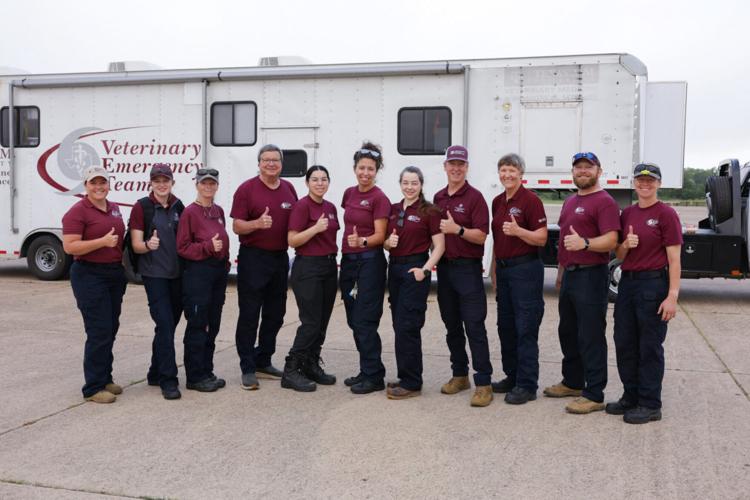
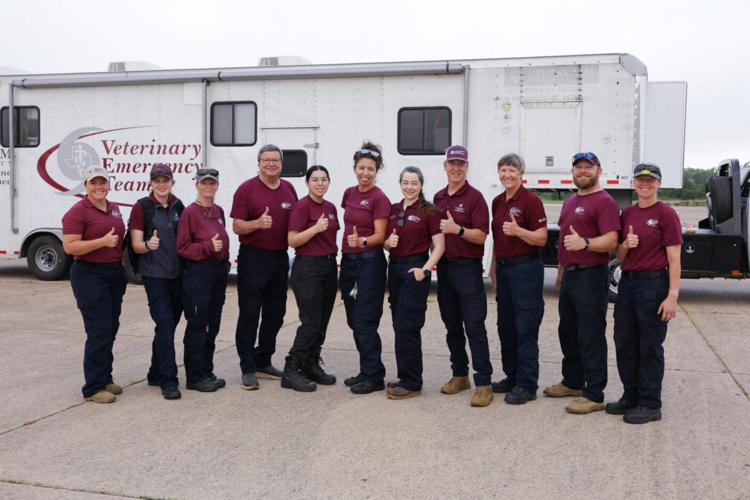
The Texas A&M Veterinary Emergency Team (VET) has been deployed to the Texas Hill Country to assist the Texas Animal Health Commission (TAHC) in its response to New World screwworm (NWS), a parasitic fly that affects livestock and other animals, including wildlife.
The deployment comes as TAHC continues field response and inspection operations. VET personnel will provide support through animal inspections, treatments and sample collection in areas under investigation or within NWS zones as part of ongoing response efforts.
“The Texas A&M VET is proud to help in this time of challenge for our state,” said Dr. Deb Zoran, VET director. “This is a unique deployment because the disaster is not as easy to see as it is when Mother Nature strikes, but our team is ready to help our state partners, livestock producers of all sizes, animal owners, and our state’s local veterinarians deal with this pest.”
People are also reading…
The initial deployment will include 12 faculty and staff members from the Texas A&M College of Veterinary Medicine and Biomedical Sciences, with additional faculty, staff and veterinary students expected to rotate in as response operations continue.
On June 3, a confirmed case of NWS was identified in a calf, representing the first detection of NWS in Texas since northward progression from Central Texas was observed in 2023. Since then, at least seven other cases have been identified, including a dog and a goat, in Texas and New Mexico.
Following those cases, at least 10 Texas counties have implemented animal movement restrictions in what the TAHC is calling an established New World Screwworm Infested Zone, and county disaster declarations have been issued.
Officials are encouraging pet owners and livestock producers to stay informed and check their animals daily; the parasite can affect livestock, pets, wildlife and, in rare cases, people, making early detection and prompt veterinary attention especially important.
Educational resources are available through the Texas A&M AgriLife Extension Service, Texas Animal Health Commission, U.S. Department of Agriculture, and the Texas A&M College of Veterinary Medicine and Biomedical Sciences’ recent Pet Talk and Pasture Talk articles, all of which provide practical guidance on identifying potential signs of screwworm infestation, monitoring wounds and knowing when to seek veterinary care.
As the largest and most sophisticated team of its kind in the country, VET works alongside local, state and federal partners during animal health emergencies and disasters. The team includes veterinarians, veterinary technicians, logistics specialists and veterinary students who provide emergency veterinary care and technical support during field deployments across Texas.


