



During World War II, malaria alone took more Americans out of the fight in the South Pacific than combat did, a fact that prompted the U.S. military to establish the permanent mosquito and pest-control units that grew into today’s Armed Forces Pest Management Board.
Since then, a small, specialized corps of military medical entomologists has worked to keep that history from repeating — and for more than 70 years, many of these military professionals have trained in the Texas A&M University College of Agriculture and Life Sciences Department of Entomology.
The field of military medical entomology traces back to the late 1800s, when scientists discovered that ticks and insects could acquire a pathogen from one animal and transmit it to another and thus spread a disease. The finding led to decades of scientific discoveries about insect-borne illnesses like malaria, yellow fever and typhus. By World War II, the Army and Navy had made entomologists an official part of military medicine.
People are also reading…
Dr. Pete Teel, Regents Professor in the Department of Entomology and a Navy veteran, is among a long line of medical entomology faculty who have mentored generations of military officers coming to Texas A&M to sharpen the skills they need to protect troops from vector-borne diseases around the world.
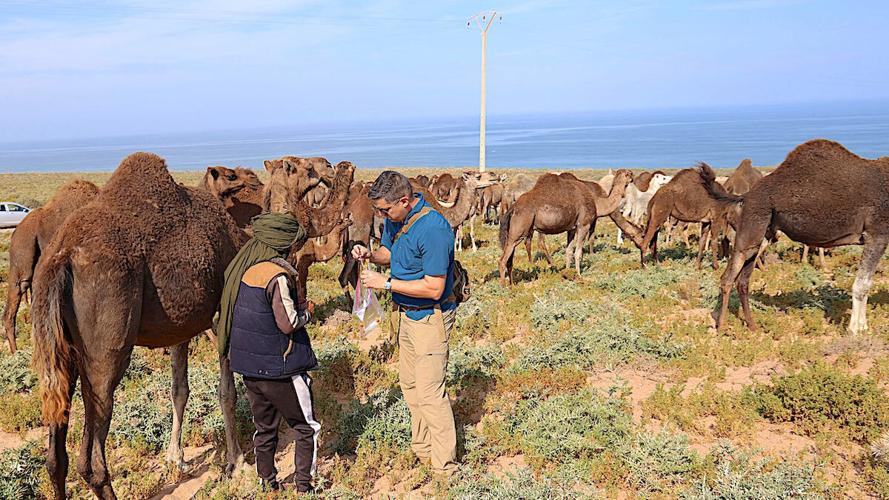
These medical entomologists in the Army, Navy and Air Force travel the world to sample arthropods such as ticks, biting flies and mosquitoes and monitor for the disease-causing pathogens they carry. They also develop and provide guidance on integrated preventive measures, including regimens to control local populations and reduce exposure to military personnel.
Texas A&M has been a leader in the field for decades, Teel said. Generations of faculty, including military veterans, built and sustained a medical entomology program that the military counts on to protect service members abroad.
“When the military needs to send people to get advanced medical entomology degrees, they turn to universities that have programs with strong reputations,” Teel said. “They determine that by assessing faculty backgrounds, the curriculum, the rigor and relevance of research on vector arthropods, and the subsequent performance of Aggie service members. We are well recognized by the military services and well positioned nationally.”
Teel and other faculty shepherd active-duty officers through an intensive three-year doctoral program built around military timelines rather than typical academic time to degree. Students are stationed in Bryan-College Station as their assigned duty post, and members who chair their committee must plan their coursework and research so they graduate and are prepared to report to their next assignment on schedule.
Beyond service in deployment zones, military entomologists also conduct advanced surveillance of arthropods and arthropod-borne diseases around the world; partner with foreign governments at national, regional and local levels; and respond when natural disasters like hurricanes or earthquakes knock out infrastructure and vector-borne illnesses strike local populations.
Through those collaborations, these entomologists are meeting a global public health challenge: The World Health Organization estimates vector-borne diseases cause more than 700,000 deaths worldwide each year, accounting for over 17% of all infectious disease deaths.
Confronting a threat that large takes people willing to step toward it. Teel said that for Aggies who are studying entomology, biology or public health but may never have considered a military path, the program offers an option rarely given a spotlight — an option he hopes more students discover.
At its heart, Teel said, the program runs on a shared duty: generations of Aggies confronting tiny adversaries in the name of something much larger than themselves.


