


Texas A&M University’s pioneering, high-impact research into understanding, detecting and treating neurodegenerative diseases like dementia has earned Texas A&M a Fast Company 2026 Innovation by Design Award.
The award recognizes design-driven solutions across industries, including health and sustainability. The honor places Texas A&M among a select group of innovators whose work is shaping the future. Texas A&M joins industry leaders and household names like Adidas, Coca-Cola, Google and The North Face on the list.
At the epicenter of the dementia-detection effort is the university’s Dementia and Alzheimer’s Research Initiative (DARI) led by Texas A&M Health, which, through its support of research aimed at improving detection, treatment and care, is supporting research into an AI-powered “digital human.” That research won the Innovation by Design large business category, ahead of drugmaker Pfizer, while Landor and Deutsche Telekom are honorable mentions.
People are also reading…
Texas A&M is also a finalist in the enduring impact category — alongside Adobe and Code and Theory, while CVS Health, L’Oreal and Radio Flyer are among the honorable mention group — and an honorable mention in the AI design category.
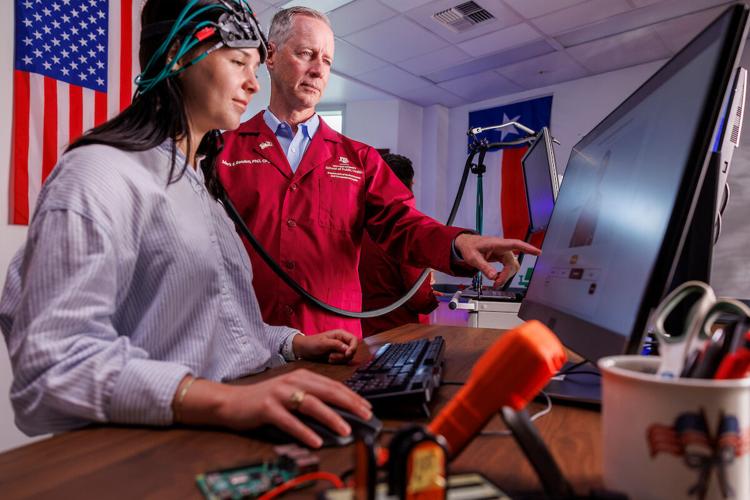
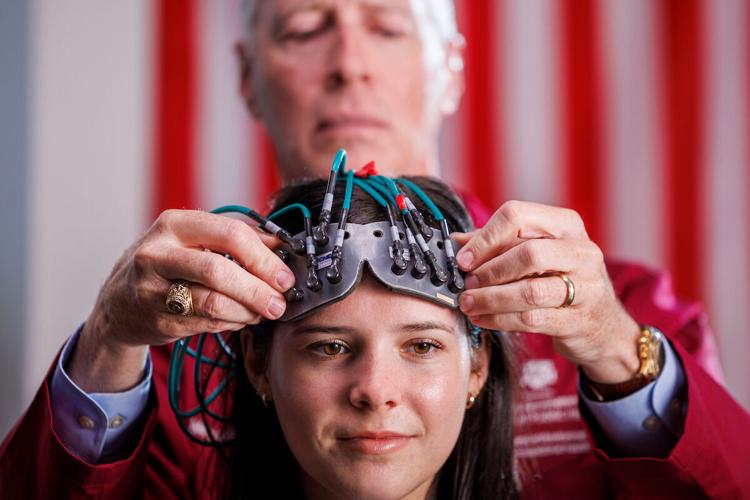
With Texas A&M’s innovative method to assess apathy, a virtual interviewer guides the patient through apathy-related questions, while monitoring biomarkers, observing facial expressions and measuring response time. Apathy can appear even before cognitive decline. Its characteristics include reduced initiation, motivation and emotional engagement; when onset of these symptoms seems sudden, it could be an early indicator of dementia.
The Texas A&M project, an interactive avatar, is designed to help clinicians detect early signs of dementia sooner, when support and planning can make a bigger difference in the quality of life for patients. The system engages users in friendly, informal dialogue and is trained to detect nuanced speech patterns, hesitations and memory cues indicative of early-stage dementia.
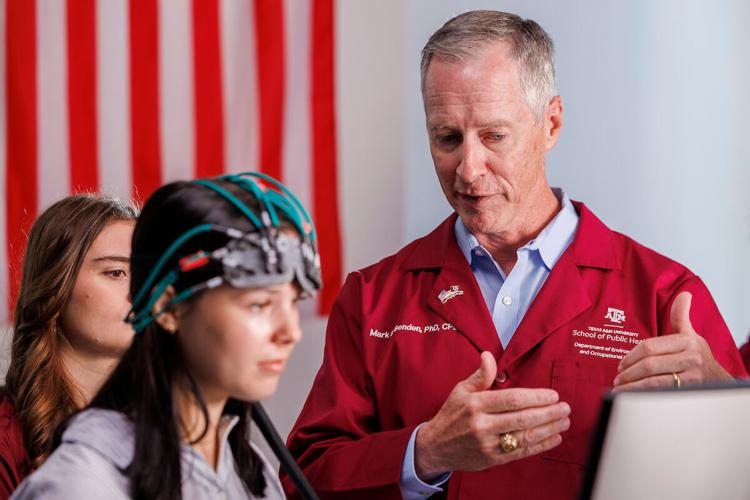
The project is led by Dr. Mark Benden, a professor of environmental and occupational health in the School of Public Health. His team combines screening questions with facial expression analysis and biometric monitoring to uncover subtle indicators that are often missed in traditional screenings.
A focus of the project is apathy, which can appear, even before cognitive decline, as reduced motivation, initiative or emotional engagement.
“Because apathy frequently precedes more visible impairment, identifying it early offers a crucial chance for proactive intervention,” Benden said.
Dementia is often diagnosed after symptoms have progressed, which can limit options for patients and families. Traditional screening can also be time-consuming and may require clinical expertise that isn’t accessible everywhere. By offering conversational, technology-enabled screening, the Texas A&M team aims to support earlier identification and expand access to follow-up care.
Identifying [apathy] early offers a crucial chance for proactive intervention.
Dr. Mark Benden
Professor, School of Public Health
Texas A&M University
Dementia often goes undiagnosed until significant cognitive decline has occurred, limiting intervention and support options for patients and families. The Alzheimer’s Association estimates more than 6.9 million Americans are living with Alzheimer’s dementia, and more than 11 million family members or friends are providing care. By empowering earlier detection, DARI’s work embodies Texas A&M’s commitment to healthcare innovation and real-world impact. It simultaneously helps destigmatize dementia screening, increases access to care and has the potential to reduce health system burdens through earlier diagnosis and intervention dramatically.
Another Texas A&M breakthrough — a nasal spray that reduces brain inflammation to slow cognitive decline in Alzheimer’s disease — was recognized as a Fast Company World-Changing Idea in 2025. And earlier this year, the university was named as one of the world’s Most Innovative Companies by Fast Company. Texas A&M was the only university on the list.
Fast Company’s Innovation by Design Awards recognize nearly 300 honorees across categories including health, sustainability and user experience. This honor reflects Texas A&M’s continued focus on research that addresses real-world needs — combining breakthroughs in innovation and design to improve people’s health and quality of life.


