

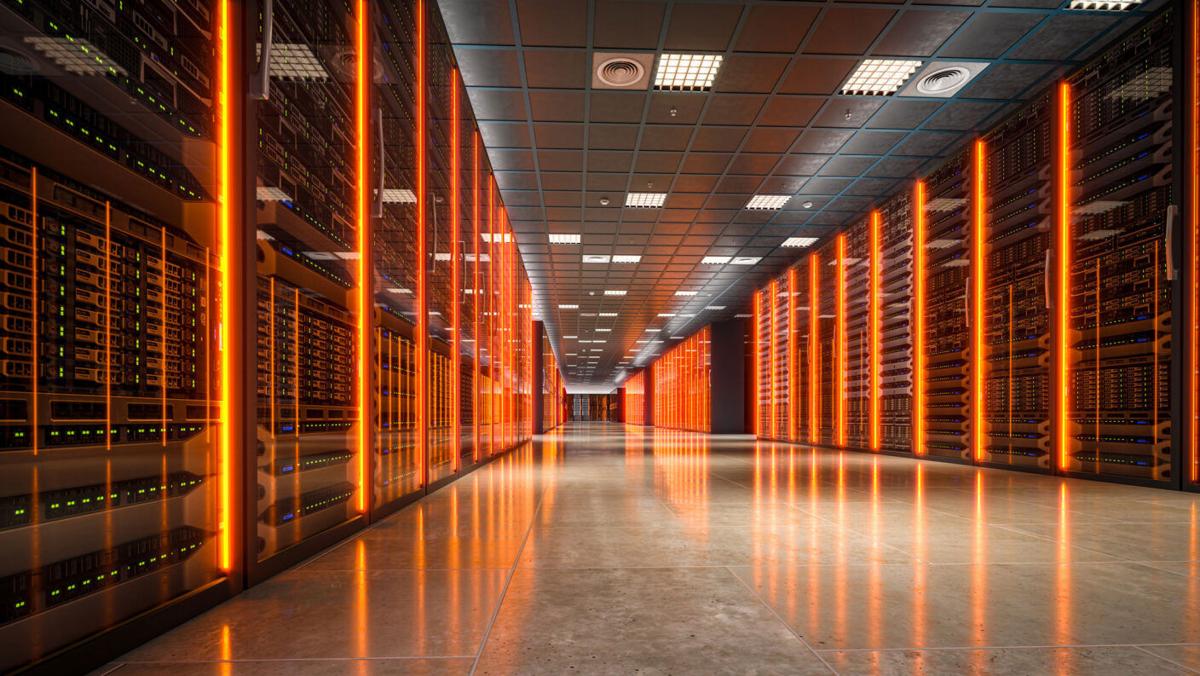
Over the past decade, the ability of artificial intelligence to speed up complex processes has made it a key tool in engineering research. Many people associate AI with cloud computing, but its growth requires expanding infrastructure, such as data centers.
Led by Dr. Qingsheng Wang and chemical engineering Ph.D. students Tylee Kareck and Chi-Yang Li, researchers from Texas A&M University are investigating an unexpected threat to data centers — increased fire risk.
In a recent collaborative publication with George Washington University and the University of California, Berkeley, the team analyzed common causes of data center fires and identified strategies to reduce those risks.
People are also reading…
“Our work provides insights to assess fire risk so engineers can design safer and more resilient data centers,” said Wang, a professor in the Artie McFerrin Department of Chemical Engineering.
As data centers increase in number and become more powerful, they require more energy from battery systems and backup generators to ensure continuous operation — a fundamental need for data storage. As more energy is used, fire risk increases.
“Modern data centers store enormous amounts of electrical energy, which means failures can escalate quickly if not properly controlled,” Kareck said.
Researchers found that fires can start in a variety of ways, including battery failures, electrical faults such as arc flashes, equipment malfunction and human error.
Large quantities of batteries and high power density increase the risk of thermal runaway — a phenomenon where a battery undergoes an uncontrollable chemical reaction that produces significant amounts of heat. This can result in the battery exploding, igniting and possibly causing runaway in other nearby batteries.
Researchers were surprised to learn that causes of data center fires tend to overlap. For instance, human error in battery installation can lead to arc flashes that ignite other components and escalate into a fire. However, arc flashes can also occur without human error due to short circuits, leading to similar fires.
“While addressing individual causes can reduce risk, holistic fire prevention and mitigation efforts are necessary to properly protect infrastructure,” Kareck said.
The team has identified several approaches to reduce fire risk in data centers, including developing safer batteries, improving fire detection systems and designing specialized fire suppression systems that will not damage sensitive equipment.
Tailoring safety practices to an individual data center is also beneficial, yet instituting standardization across facilities can allow implementation of broad safety standards.
“As the demand for cloud computing and AI grows, fire safety must evolve alongside data center technology,” Wang said.
In the future, the team believes that large-scale testing and improved data collection will lead to a clearer understanding of how fires start and spread in data centers. They hope an increased collaboration between researchers, industry leaders and regulatory agencies will establish consistent safety practices and improve fire incident reporting.
External collaborators include Dr. Jiejia Wang from the School of Engineering and Applied Science at George Washington University and Dr. Michael Gollner from the Department of Mechanical Engineering at the University of California, Berkeley.